You keep circling the same decision.
Whatever your business is stuck on, we think it through with you and teach your people, build the fix, and keep it running. The work moves quicker, your customers get answered, and less of it lands on you.
You do not have to know which one it is before you call.
The count so far
32 AI helpers built here, one job each
Counted Aug 25, 2026
10 rooms we have taught in, each with a name and a date
Checked Aug 25, 2026
Go and check32 five-star reviews
Counted on the profile Aug 14, 2026
Go and checkWhat people arrive with
Read the one that sounds like you.
Every one of these lands on the same desk, and comes back as something that runs without you.
You had it once, it got decided, and your own people were taught to run it. Take me there
The phone got answered at nine at night and the job was booked before they hung up. Take me there
Something goes out every week whether or not you remembered. Take me there
Before anything gets built
Ask three people how the work gets done and get three answers.
Three answers means three versions of the job. One quoted off last year’s sheet. Two of your people telling the same customer different things on the same Tuesday. What you get from us first is a decision on which one is right, and a plan your people can follow.

In their words
What it is like on the other side of the table.
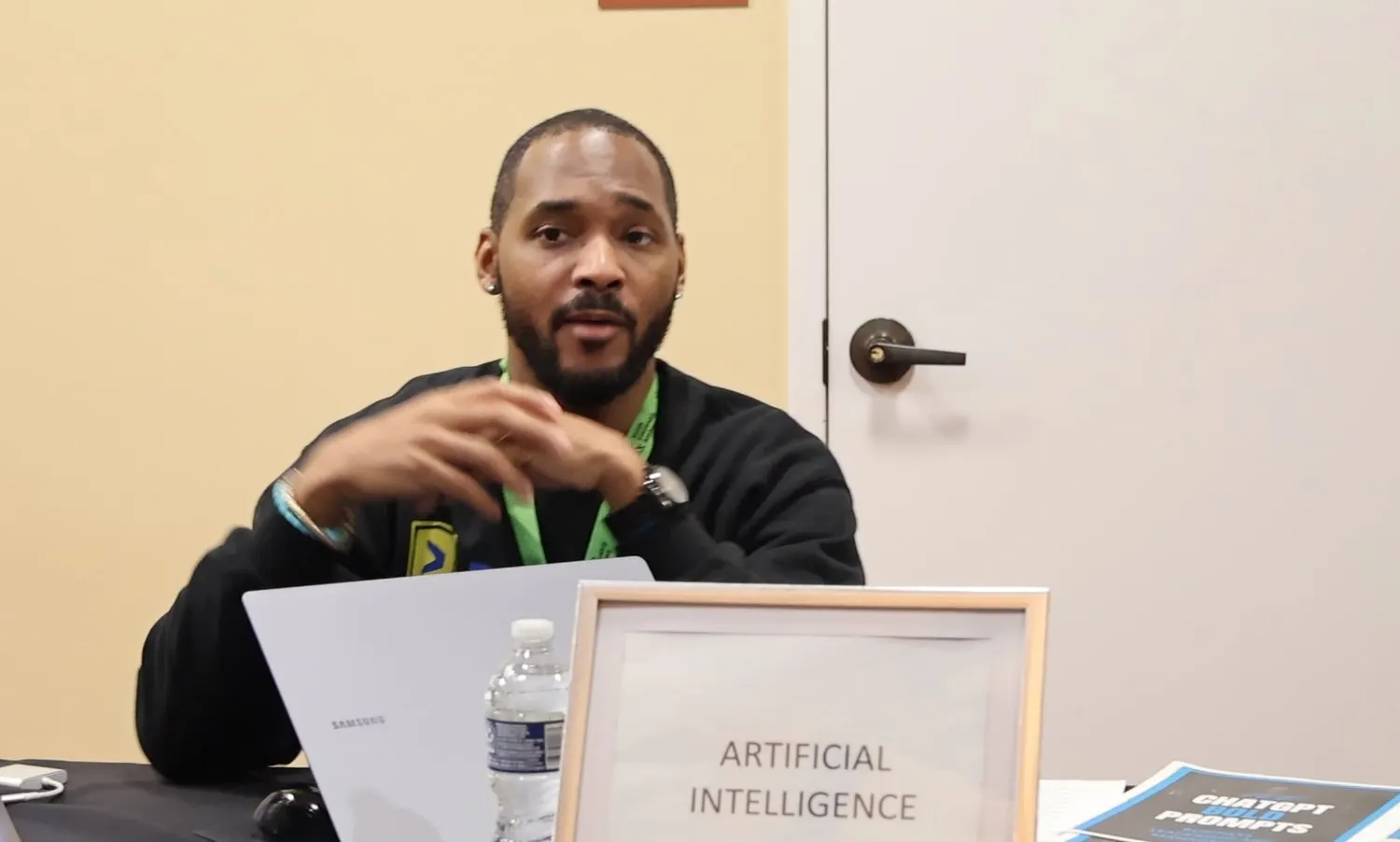
Jermaine Peguese gave excellent insight on how to make work more efficient and productive.
Three kinds of work
One number to call, whatever the problem turns out to be.
Nobody wants to explain their business three times, then sit there while three companies blame each other. Three kinds of work, and one company answerable for all three.
Think it through
Something is slowing the whole place down and nobody has had time to sit and find out what. You get the answer in writing, and the order to fix it in.
Or the software is fine and your team is still doing it the old way, because nobody sat with them. Workshops for teams, sessions for leadership, and keynotes on doing this work in a real business, until two of your own people are the ones running it.
Sometimes the honest answer is that AI is wrong for you right now, and what needs fixing first is how the work moves. You will hear that, and what to do instead.
Build it
The same information gets typed into three programs by hand, by somebody good. Afterwards it is typed once, and that person is back on the work you hired them for.
Keep it running
Every year the same program gets built again from nothing, because nothing from last year survived. Now it starts where it left off, whoever is on staff.
Everything behind those three is already built and running. The proof is on the work page.
What it connects to
It plugs into what you already pay for.
Nobody in your building can name every piece of software you pay for. The bank statement can. All of it stays, and nobody has to learn a thing.
- ChatGPT
- Microsoft 365
- QuickBooks
- Google Workspace
- Dropbox
- Claude
- Gemini
- Zoom
- Slack
- Stripe
That list is email, files, invoicing, payments, calls, and whatever your people book jobs in. Yours is probably not up there. Say the name on the call and you will get a straight answer.
What sits in the middle
Pathworth Intelligence
Your email and your invoicing keep working. Nobody has to remember where a customer said what.
Pathworth Intelligence is the one piece we bring. We built it and we own it outright, and it goes underneath the software you already pay for. Whoever the customer talks to on Thursday can see what was said to him on Monday.
Every customer and every open deal in one place, so you can see who is holding what. Follow-up going out on time without anybody remembering. A computer voice that answers your phone, asks the right questions and books the time. Your tech texts your name and number from the truck, and it saves straight into the customer’s phone.
When you need it to do something it does not do yet, nobody here has to go and ask a supplier for it.
Underneath it sits one file. What the place knows goes in one file, inside the software your team already opens, so the questions stop landing on one person’s desk. That file is Brain Power, and it is the one most people need first.
Every job we take
The Pathworth Method.
Five steps, always in this order. Stop after any one of them, and whatever is written down by then is yours.
Listen
The first call. You say the whole thing and somebody writes it down.
Diagnose
The audit. Somebody comes out and looks at the work up close.
Blueprint
A plan in writing, plain enough to hand to anybody.
Build
You watch the thing get made.
Upkeep
Your people stay in charge, or we keep it running. Your choice.
What most of it turns into
One file underneath the whole business.
Everything your people know, written down once and wired into the tools you already pay for. It answers on a Tuesday whether or not the person who knew it is at their desk.
See how Brain Power works
Who picks up
Bring us the problem that does not have a name yet.
People bring us those all the time. A program that has to run in six weeks. A room that has to be filled. A price that went out of date and nobody caught it. The president of this company takes that call himself.
If it is something we can take on, we take it on. If it is not, you hear that on the same call, along with what we would do instead.
The next step
Let’s find out how much easier your place could run.
One call, and you get a straight read on what is slowing it down and what we would do about it. What you are buying is work that moves quicker, customers who get answered the same day, and nobody carrying the whole thing on their own.
It costs nothing to book, and nothing for the call itself. If the honest answer is that you do not need us, that is the answer you get.